




In the Gulf region, extreme heat is the number one enemy of water purification systems. While high temperatures are uncomfortable for us, they are often fatal for Reverse Osmosis (RO) plants. In Oman, the harsh climate creates unique stresses that lead to membrane degradation, high maintenance costs, and poor drinking water quality.
To keep your system running at peak performance, you must understand how heat impacts your hardware. This guide explores the three main “failure points” and provides a professional RO plant maintenance checklist to protect your investment.
Why RO Systems Fail in the Heat (The Science of Thermal Stress)
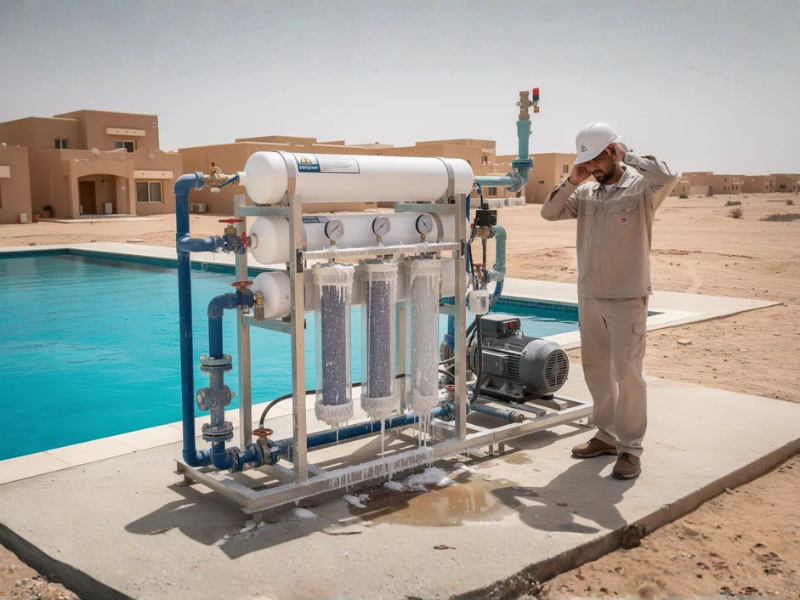
Understanding the “why” is the first step toward effective prevention. When temperatures rise, the physics and chemistry of water purification change fundamentally.
- Accelerated Membrane Fouling & Scaling (The Chemical Challenge)
The chemistry of water is highly temperature-dependent. As feed water temperatures rise, the solubility limits of various minerals—specifically calcium carbonate, sulfates, and silica—change. In a process known as “crashing,” these minerals reach a saturation point much faster in warm water, leading to RO membrane fouling due to heat.
When minerals precipitate, they form a hard, crystalline “scale” on the delicate surface of the membrane. This scale acts as a barrier, forcing the high-pressure pump to work harder to push water through, which in turn consumes more energy and increases the wear on the system.
Beyond mineral scaling, we must address the biological threat. Warm water is the ideal breeding ground for microbial activity. This leads to biofouling, where bacteria, fungi, and algae multiply within the membrane elements. These organisms create a “biofilm”—a thick, sticky slime that is notoriously difficult to remove once it has taken hold. Biofouling doesn’t just block water flow; it can also cause localized pH changes on the membrane surface, leading to chemical damage of the polymer.
2: Physical Membrane Damage (The Material Challenge)
The heart of the RO process is the Thin-Film Composite (TFC) membrane, typically constructed from a layer of polyamide. While polyamide is incredibly effective at rejecting salts, it is a polymer that is physically sensitive to thermal fluctuations.
In the water treatment industry, we track a metric known as “Flux.” As water temperature increases, the water becomes less viscous (thinner), allowing it to pass through the membrane more easily. While this might seem like a benefit, it comes at a high cost. At temperatures exceeding 35C, the polyamide layer begins to soften and undergo thermal expansion.
As the membrane material stretches, its “pores” become slightly larger and more irregular. This leads to a permanent drop in salt rejection rates. Once the polymer is thermally deformed, it can no longer effectively block smaller ions, resulting in a spike in permeate TDS (Total Dissolved Solids). Much like a plastic bottle that warps in the sun, once the structural integrity of the RO membrane is compromised by heat, it cannot be “reset”—the only solution is an expensive full-membrane replacement.
3. Pump & Equipment Stress (The Engineering Challenge)
The high-pressure pump (HPP) is the most expensive mechanical component of your RO plant, and it is particularly vulnerable to Oman’s summer heat.
- Motor Overheating: High ambient temperatures mean the motor cannot shed heat effectively through its cooling fins. When a motor runs hot, the internal winding insulation begins to break down, significantly shortening the motor’s lifespan.
- Seal and Gasket Failure: High-temperature water is aggressive toward standard elastomers. Rubber O-rings and gaskets that perform well at $25^\circ\text{C}$ can become brittle or overly soft at 40C. This leads to pressure leaks and sudden, unscheduled downtime.
- Instrumentation Drift: Sophisticated sensors TDS meters, pressure transducers, and flow meters rely on precise electrical resistance. Extreme heat causes “drift,” leading to inaccurate data. If your sensors are lying to you about your water quality or pressure levels, you may be making operational decisions that are actively damaging your plant.
Part 2: Prevention: Your High-Temperature Maintenance Guide
To ensure your plant survives an Omani summer, you must transition from reactive repairs to a proactive maintenance strategy.
Step 1: Physical Infrastructure & Cooling
Shading and Ventilation are your first lines of defense. An RO plant sitting in the direct sun can experience “greenhouse” temperatures inside its housing that are 10C than the outside air.
- Action: Install reflective shading or housing with forced-air ventilation to ensure ambient air is constantly circulated.
- Feed Water Cooling: In industrial applications, consider the ROI of a heat exchanger or a cooling tower. Lowering the feed water temperature by just $5^\circ\text{C}$ can significantly extend the life of your polyamide membranes and reduce the rate of scaling.
Step 2: Smarter Chemical Treatment
Your chemical dosing must be dynamic, not static. The Langelier Saturation Index (LSI), which predicts the scaling potential of water, changes as temperature rises.
- Antiscalant Dosing: Work with a professional to adjust your antiscalant concentration for the summer. You need a formula specifically designed to remain stable and effective at high temperatures.
- Biocide Protocols: Implement a strict, non-oxidizing biocide dosing schedule. Preventing the formation of a biofilm is 10 times cheaper than trying to clean one out after the fact.
- Increased CIP Frequency: During the summer, your Clean-In-Place (CIP) frequency should increase. Performing a “mild” acidic wash to remove light scaling before it becomes a permanent mineral crust will save you thousands in membrane replacement costs.
Step 3: Operational Best Practices
- Daily Logging: Monitor your Differential Pressure (Delta P). A rise in Delta P across a single stage is the “smoke before the fire” for fouling.
- Lubrication: Use high-temperature, synthetic lubricants for all pump bearings and moving parts. These lubricants maintain their viscosity when standard oils fail.
- Night-Time Operation: If your storage capacity allows, run your primary production cycles during the cooler night hours to reduce the thermal load on the motors and the membranes.
Conclusion
Operating a Reverse Osmosis plant in Oman is a high-stakes endeavor that requires more than just mechanical knowledge it requires an understanding of the intersection between chemistry, thermodynamics, and local environmental stress. By following this strict preventative maintenance plan, you don’t just protect your hardware; you lower your energy bills, ensure consistent water purity, and avoid the massive capital expenditure of premature membrane failure.
At Water Life Technologies, we specialize in the unique challenges of the Omani climate. We don’t just provide parts; we provide engineered water solutions. Don’t wait for the heat to compromise your water quality or kill your pumps.